
Split ends roughen texture, boost tangles, and turn mild frizz into major frustration. If you're searching “how to take care of long hair” or refining your long hair care routine, focus on three priorities:
- permanent removal (trimming), 2) temporary concealment (smoothing), and 3) prevention (stopping new splits).
Core truth: trimming is the only permanent fix. Everything else reduces friction and improves slip—highly worth it for length retention.
This leaf page fits our Long Hair Care cluster:
- Full schedule → Long Hair Care Routine
- Technique → How to Detangle Long Hair
- Ongoing habits → Long Hair Maintenance
- Low-damage looks → Long Hair Styles
Jump to:
• Causes • Decision • Methods
• Module • Night • Trimming
• Myths • FAQ
Main Causes of Frizz, Damage & Split Ends
Long hair ends are the oldest part of the strand—so they’re naturally more fragile and more exposed to daily wear. The most common triggers:
- Excessive heat styling (high temperature, repeated passes)
- Friction (rough pillowcases, towels, clothing collars, backpacks)
- Aggressive detangling (dry brushing, yanking knots)
- Over-washing / harsh cleansing that strips oils from lengths
- Chemical processing (coloring, relaxing, perming)
- Environment (UV, wind, dry air, chlorine, salt water)
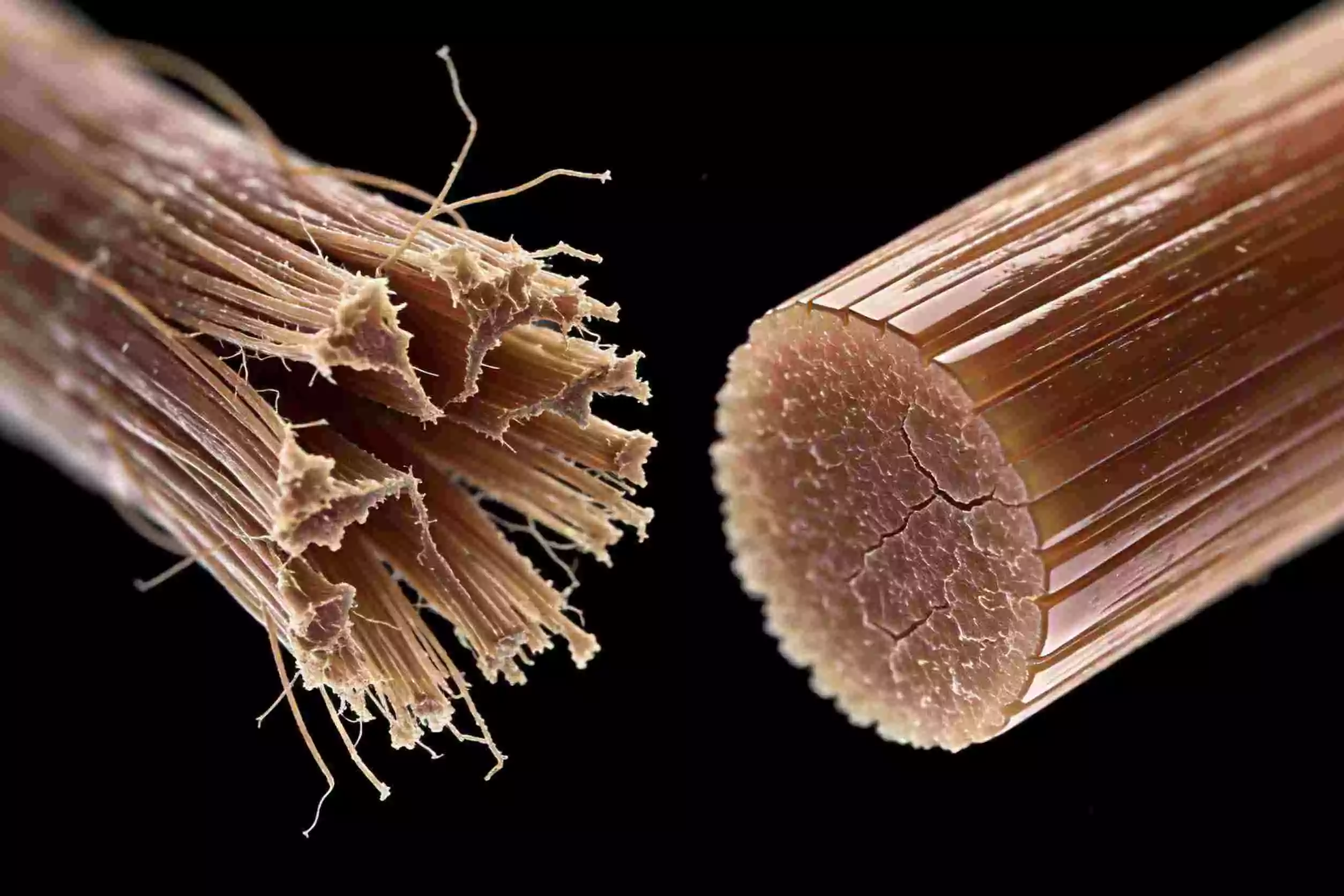
What’s happening: cuticle wear → moisture escapes → ends feel rough → split ends form.
Rough tips also trap humidity and snag neighboring strands, creating extra frizz and tangles.
Quick Decision Guide: Where to Start
Visible splits + endless tangles?
- Today: condition well, detangle only with slip, then apply a light leave-in and seal the last 2–3 inches
- Next wash: follow the Split-Ends Module below
- Soon (1–2 weeks): schedule a small dusting trim if splits are visible
Heavy heat/chemical exposure?
- Always: heat protectant + lower temperature
- Weekly: add one moisture/strength session
- Daily: reduce friction (soft ties, gentle brushing, satin at night)
Healthy overall but frizzy ends?
- Condition lengths more consistently (mid-to-ends every wash)
- Night satin + loose style
- Reduce shampoo on lengths (clean scalp, protect ends)
Pros & Cons: Methods to Address Split Ends
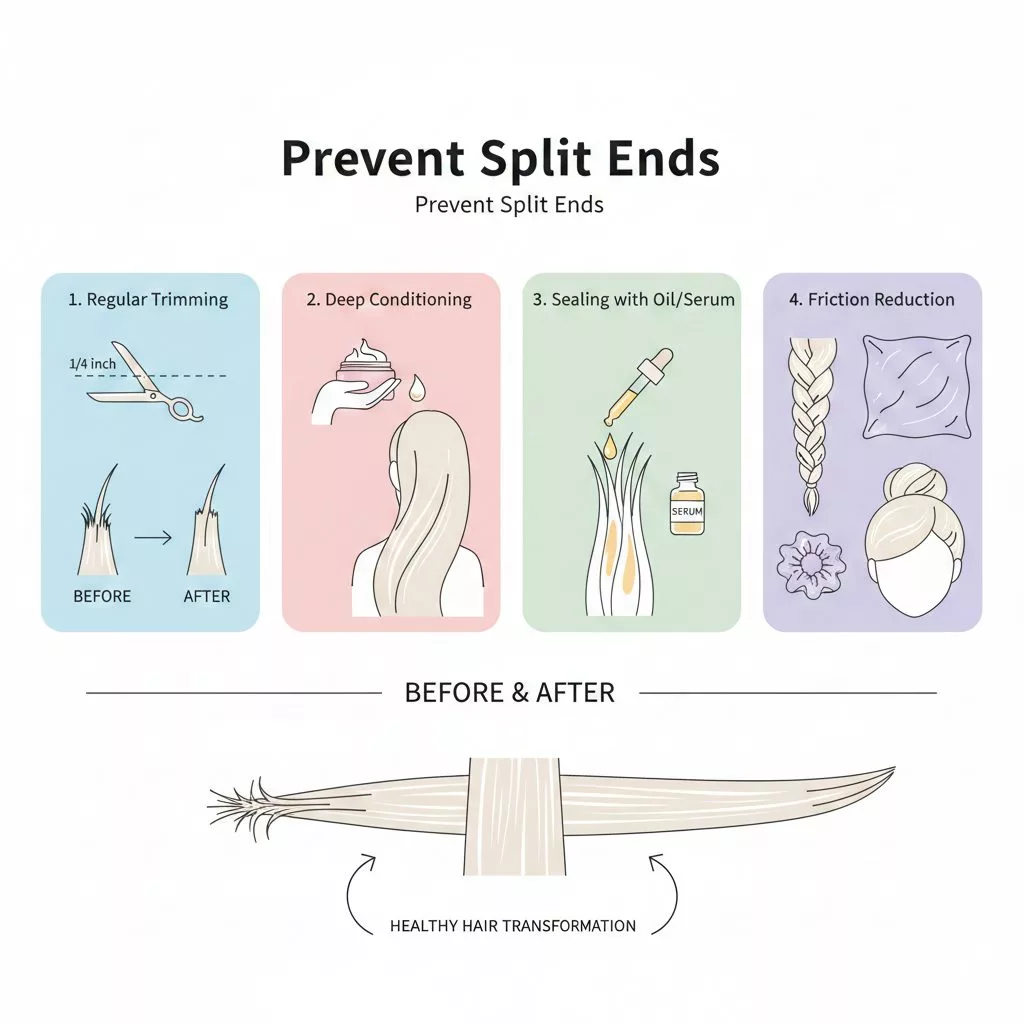
1) Trims / Dusting (small regular cuts, 6–12 weeks)
Best for: permanent removal & length retention
Pros: clears existing splits; prevents further splitting at the tip; ends look fuller
Cons / Watch-outs: tiny length loss (minimal with dusting)
Note: “Search & destroy” (snipping individual split ends) can help when splits are very limited, but only use sharp hair shears and avoid repeated handling that increases friction.
2) Moisture & Conditioning Support (deep weekly treatments)
Best for: dry/rough/frizzy ends
Pros: restores softness and slip; reduces snagging; makes detangling safer
Cons / Watch-outs: doesn’t rejoin splits; excess can cause build-up or weigh hair down
3) Daily Smoothing & Sealing (light leave-in/serum on ends)
Best for: instant frizz/tangle control
Pros: temporarily hides split ends; reduces daily friction; improves shine
Cons / Watch-outs: concealment only; heavy if over-applied
4) Protective Habits & Friction Reduction (night + daily)
Best for: highest long-term prevention ROI
Pros: free/cheap; compounding benefits; protects ends every day
Cons / Watch-outs: requires consistency; results build over time
5) Heat Management (protection + reduced frequency)
Best for: heat-damaged/styled hair
Pros: dramatically slows new splits; preserves length integrity
Cons / Watch-outs: fewer styling days; works best paired with moisture + gentle technique
Bottom line: habits + small trims win. Nothing permanently rejoins a split strand.
Split-Ends Module: Plug Into Your Routine
Add to → Long Hair Care Routine
Wash Day (Ends-First)
- Cleanse the scalp gently; let suds rinse through lengths (don’t scrub ends)
- Condition mid-to-ends; leave 3–5 minutes
- Detangle with max slip (fingers → wide comb, ends up)
- Apply a light leave-in on damp hair
- Seal last 2–3 inches minimally
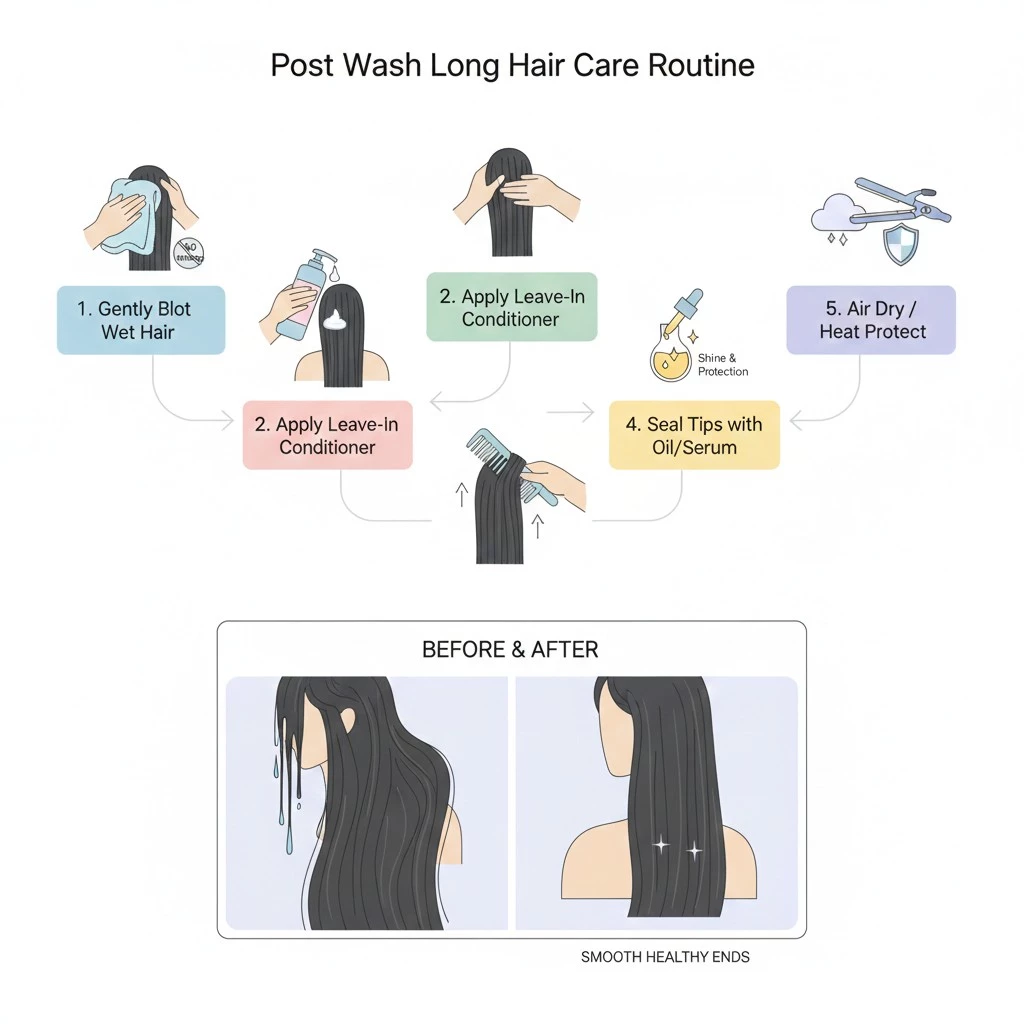
After-wash (2 minutes)
- Blot (don’t rub) → spread a small amount of leave-in → comb ends-up gently → seal tips lightly → air-dry or protect before heat.
Do / Don’t (fast rules)
- Do: detangle with slip, start at ends, keep handling gentle
- Don’t: rub with a towel, dry-brush fragile ends, or use high heat without protection
Heat? Protect always + lower temp + cut sessions.
Detangle full guide → How to Detangle Long Hair
Overnight Frizz & Split Prevention (High Impact)
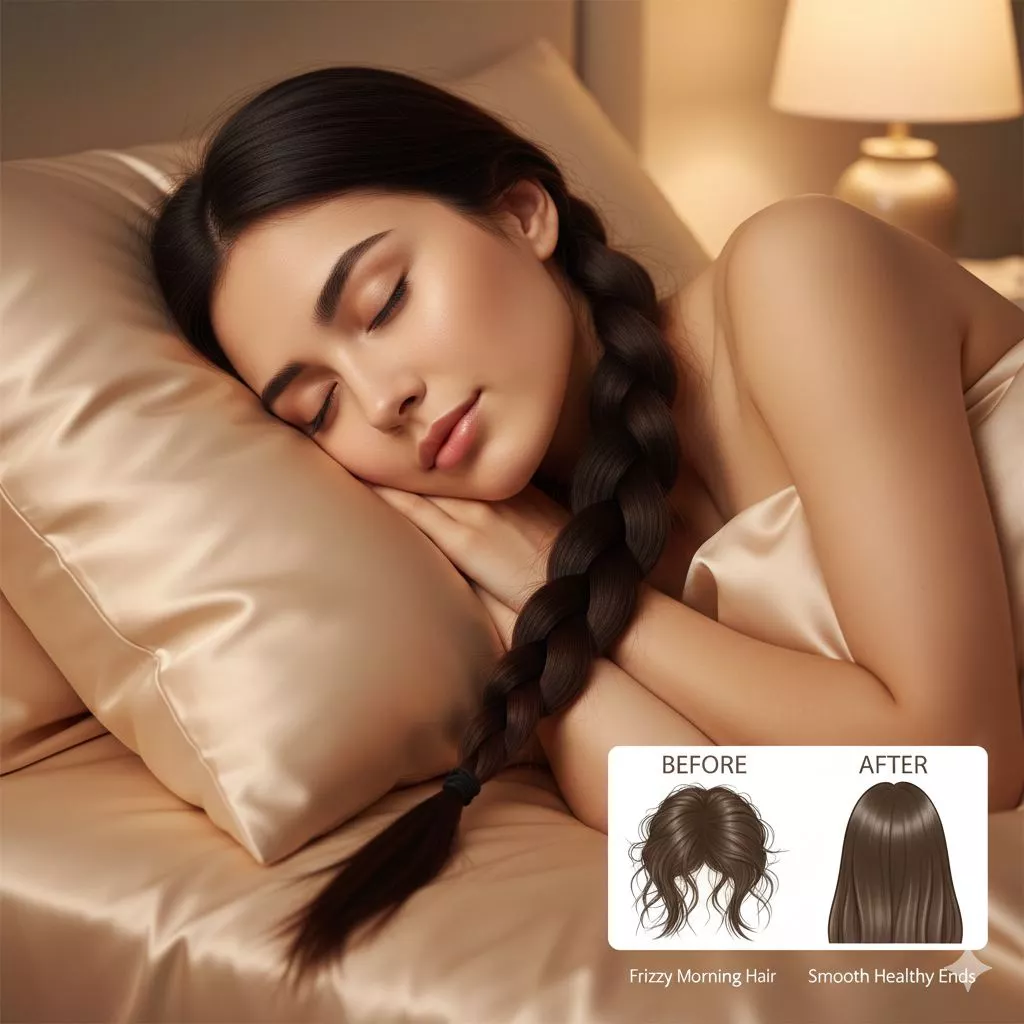
Overnight friction can quietly shred ends.
Routine:
- Satin/silk pillowcase (vs cotton)
- Loose braid/low soft bun (soft tie)
- No sleeping wet (weaker + tangly)
Bonus friction traps: hoodie strings, backpack straps, scarves/collars—minimize daily rub or keep hair loosely secured.
Strategic Trimming for Length Goals
Grow long? Trim proactively:
- Dusting: 2–5 mm every 6–10 weeks
- Micro-trim: 0.5–1 cm every 8–12 weeks
- Bigger trim: only if ends are thin/see-through or tangles don’t stop
Due signs: constant snags, bottom-only frizz, repeated knots at the same spot, crispy feel.
Heat Styling Without Wrecking Ends
Guardrails > quitting:
- Protect every use
- Moderate temp only
- Slow single pass > fast multiples
- Fewer heat days
Crunchy post-style? Increase leave-in and reduce frequency.
Quick Tips for Long Hair Men
Minimal effective plan:
- Scalp wash 2–4×/week (oil-dependent)
- Ends condition every wash
- Light seal post-towel
- Gentle detangle; avoid tight styles
Technique + moisture beats complexity.
Hair Extensions & Split Ends
Extend how long do hair extensions last damage-free:
- Gentler/more frequent detangle
- Light length moisture (avoid bonds)
- Satin night + loose styles
- Low heat near attachments
- Strict maintenance schedule
Quick thinning? Reassess placement and friction habits.
Common Myths vs Reality
- Myth: products seal splits forever.
Reality: temporary smoothing only; trimming removes splits permanently. - Myth: splits “travel up” uncontrollably no matter what.
Reality: they seem to spread because friction keeps breaking the same weak area—prevention can slow or stop progression. - Myth: brushing lots = shine.
Reality: over-brushing dry hair increases friction and creates more splits.
Essentials by Function (No Brands)
Pick by goal:
- Daily smooth/conceal: lightweight leave-in/serum for slip + friction cut
- Weekly moisture: deep treatment for softness and easier detangling
- Heat/chemical shield: protectant or strengthening step as needed
Consistency > trends.
Preview Healthier Ends with AI (No Damage)
Preview low-friction styles that protect ends while you grow length:
- Loose braids
- Half-up
- Low buns
- Soft waves
Our AI tools personalize it for your hair type (so you can protect your ends while you improve your routine):
AI Hairstyle Try-On for Low-Friction Styles
AI Face Shape Analysis to Choose Better Cuts
Virtual Hair Color Try-On (No Bleach Damage)
More ideas: → Long Hair Styles | Long Hair Trends
Quick FAQs
Can you fix split ends without cutting?
You can temporarily conceal split ends by improving slip and reducing friction—think lightweight smoothing on the last few inches and gentler detangling. But a split strand doesn’t permanently “heal.” Trimming is the only true removal, while prevention helps you keep more length afterward.
How often should I trim for long hair?
Most length goals do well with dusting every 6–10 weeks or micro-trims every 8–12 weeks. If ends snag constantly, look thin, or frizz only at the bottom, it’s usually time—even if you’re trying to grow.
What’s the best overnight routine for frizz prevention?
Use a satin/silk pillowcase and keep hair loosely secured (braid or low soft bun). This reduces nightly friction, which means fewer tangles, less breakage, and fewer new split ends over time.
Does oil fix split ends?
Oil won’t rejoin a split strand, but it can reduce dryness and friction so ends snag less. Use a tiny amount on the last 2–3 inches after leave-in, especially in dry weather or if clothing rub is unavoidable.
Why do I get split ends even with conditioner?
Conditioner helps, but split ends often come from friction (towels, pillowcases, collars, backpacks) or rough detangling. If you condition but still yank through knots or rub hair with a towel, splits can keep forming.
How to prevent split ends in long hair without heat?
Even without heat styling, you can get split ends from friction and tangles. Focus on detangling with slip, sealing ends lightly after washes, and using satin at night. Keep ends protected from daily rubbing (hoodies, scarves, straps).
Does trimming make hair grow faster?
No—hair grows from the roots. Trimming helps you retain length by preventing breakage, so your long hair appears to “grow better” because you lose less to splits.